The Jefferson Project
Brooklyn Gut Renovation
Full-Building Reconfiguration + Vertical Expansion
This Brooklyn building began as a six-family property, but the opportunity was in reimagining what it could become. Taking the structure down to the studs created a true blank slate — a chance to rethink layout, square footage, and use from the ground up. The focus was highest and best use, not incremental improvement.


The Jefferson Project
Through strategic owner's representation and disciplined renovation project management, we repositioned the asset by reconfiguring units, maximizing unused FAR, and rebuilding the property to align with long-term value and livability.
Before demolition began, the broader team was aligned around a clear plan. Architectural intent, budget parameters, and construction sequencing were coordinated early so that decisions made in pre-development translated cleanly in the field. Once that framework was established, the building was fully gutted. From there, we oversaw drawings, finish selections, and construction through completion — keeping design ambition and financial discipline in step.
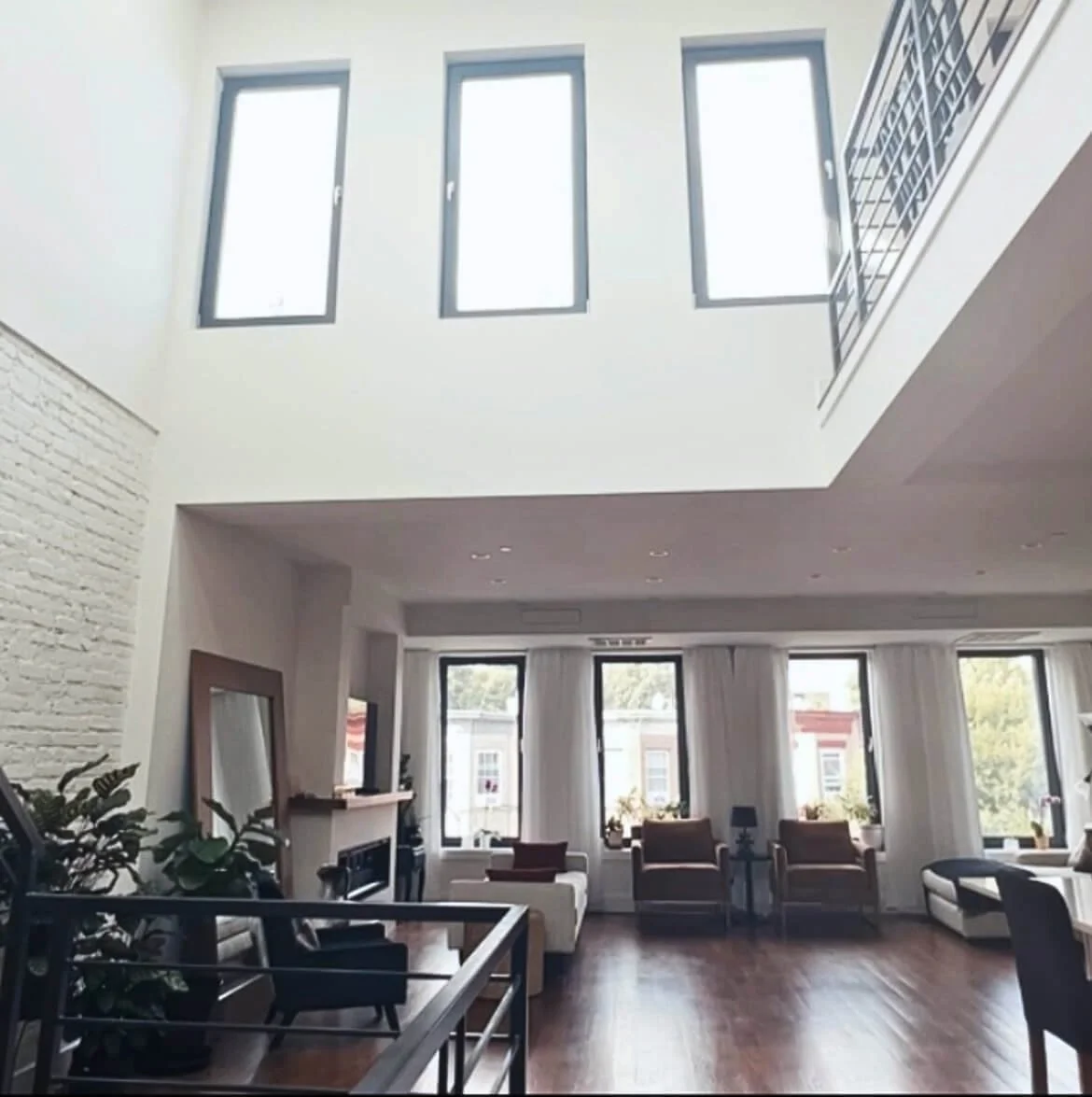
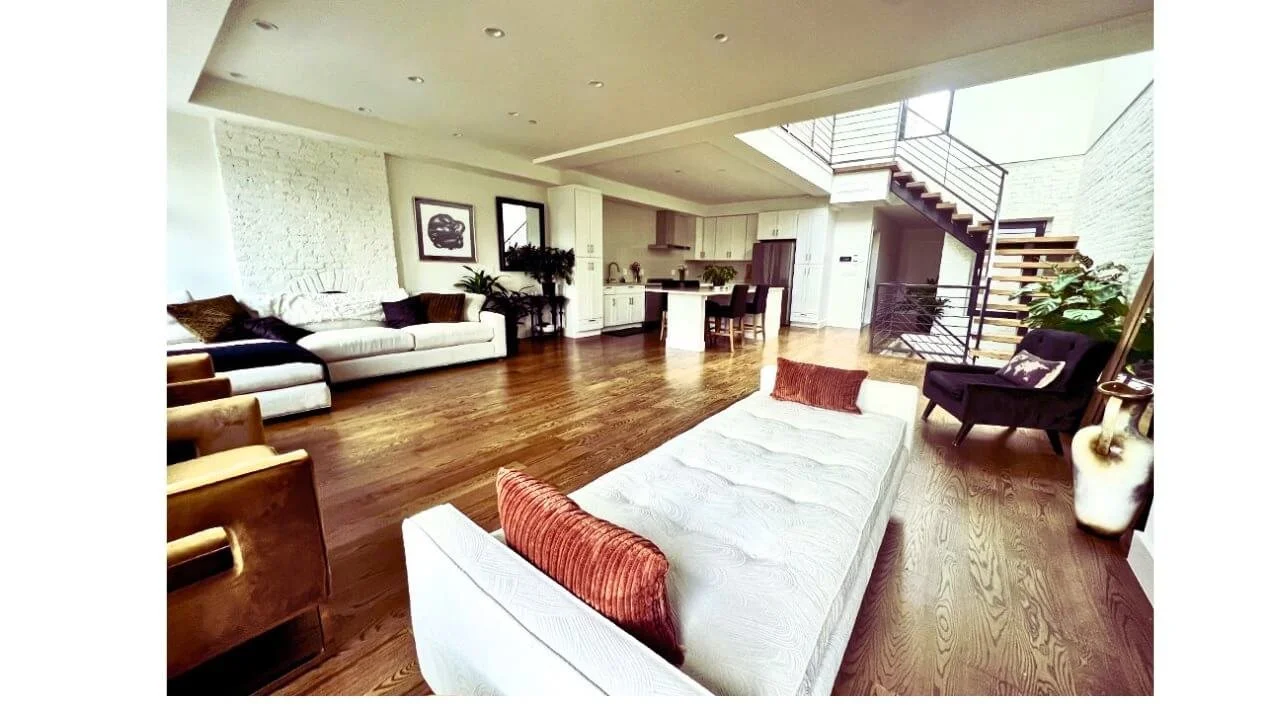
The most significant move was combining three units to create a spacious owner's triplex. We leveraged unused FAR to add a loft level, unlocking vertical square footage that had previously gone untapped. That loft now leads to a private roof deck — a meaningful amenity in Brooklyn that elevates both lifestyle experience and property value.
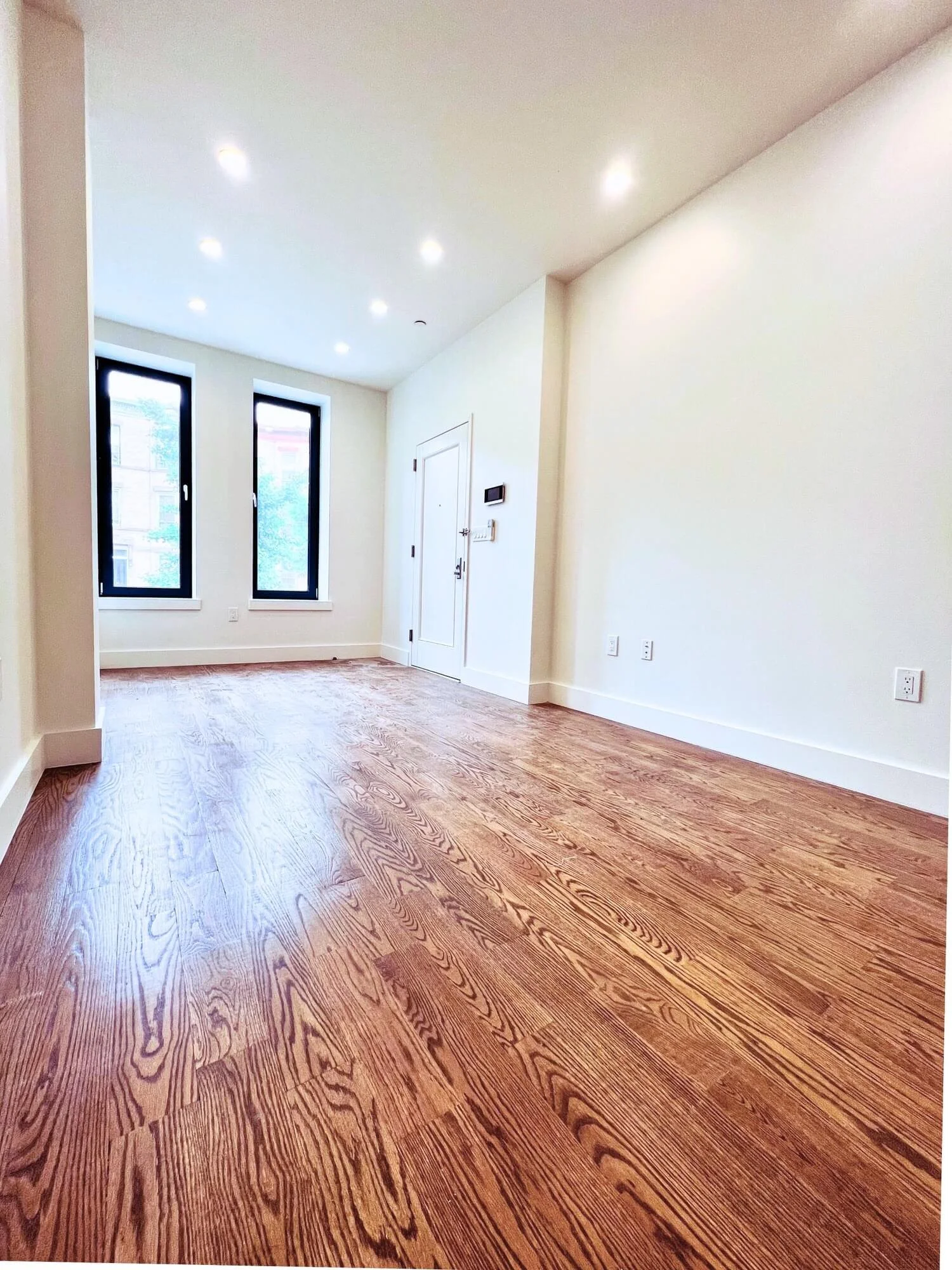
The owner's residence was designed to feel open and grounded. Red oak hardwood floors run throughout, creating warmth and continuity across levels. Circulation was simplified. Natural light was prioritized. Storage was integrated intentionally. The aesthetic is simple and chic - modern without being trend-driven.
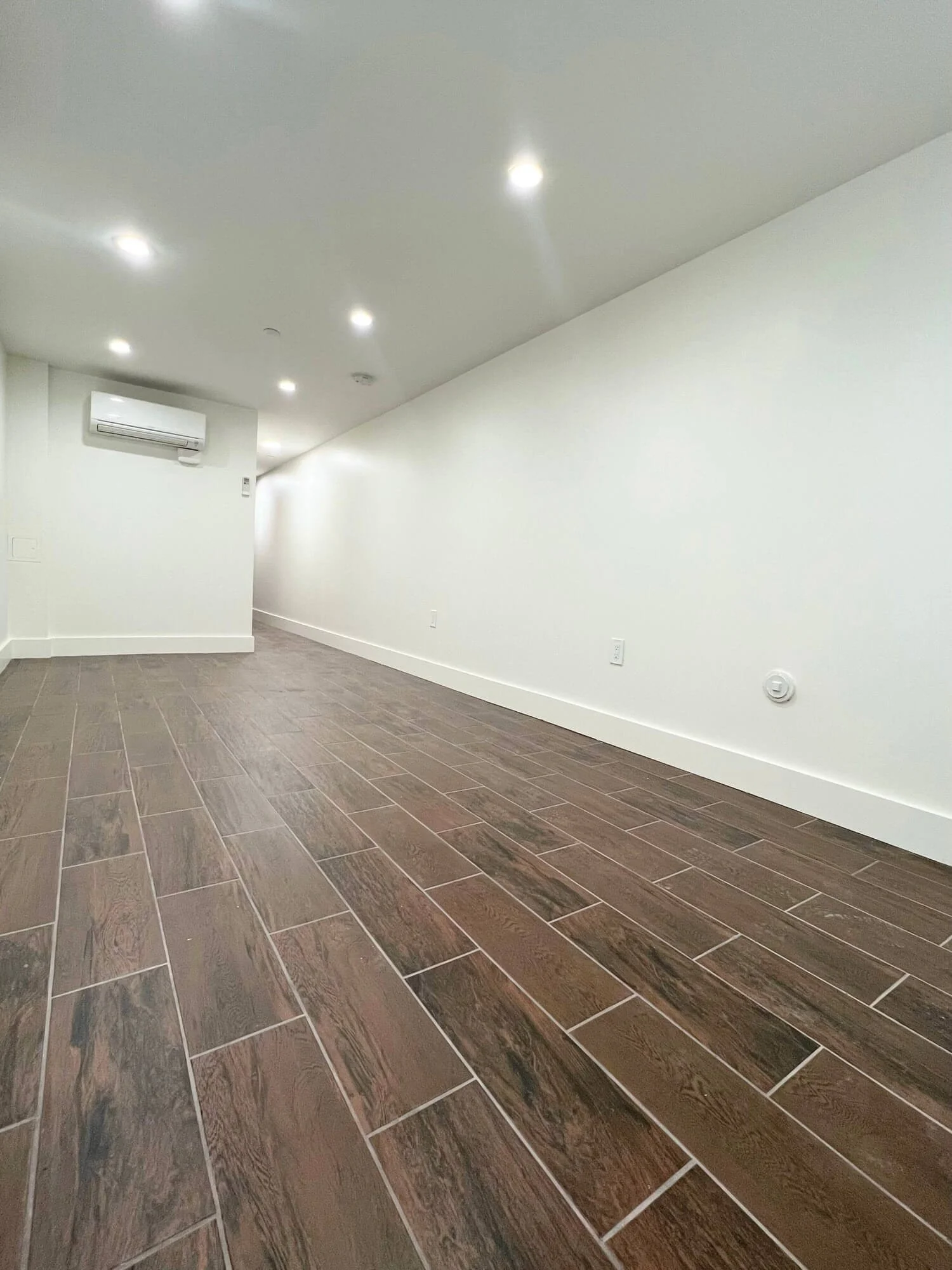
On the first floor, existing apartments were duplexed with newly finished basements. Each now offers two bedrooms and one-and-a-half baths, layouts that perform strongly in the Brooklyn rental market. The additional square footage allowed for more comfortable bedroom sizing and improved living flow. A separate studio unit was also created, diversifying the income mix and strengthening operational flexibility.
A compact home gym was incorporated in the basement, adding functional amenity space without unnecessary square footage loss. Throughout the building, every reconfiguration was tied to usability and scale — not just added area.
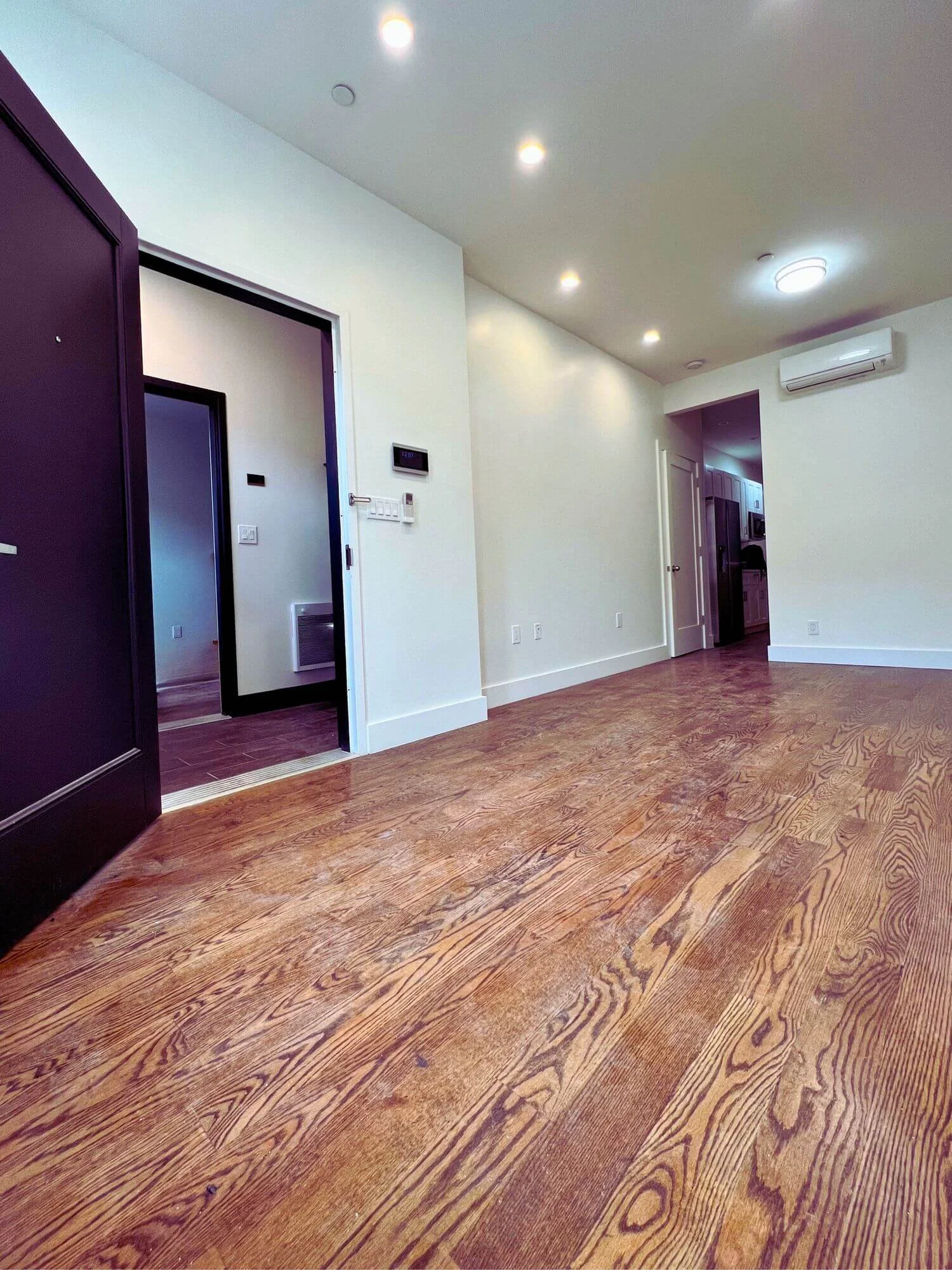
Infrastructure modernization was central to the repositioning. We oversaw the decommissioning of the existing oil tank and transitioned the building to energy-efficient mini-split systems throughout. This improved comfort, reduced maintenance exposure, and updated the building's overall mechanical profile.
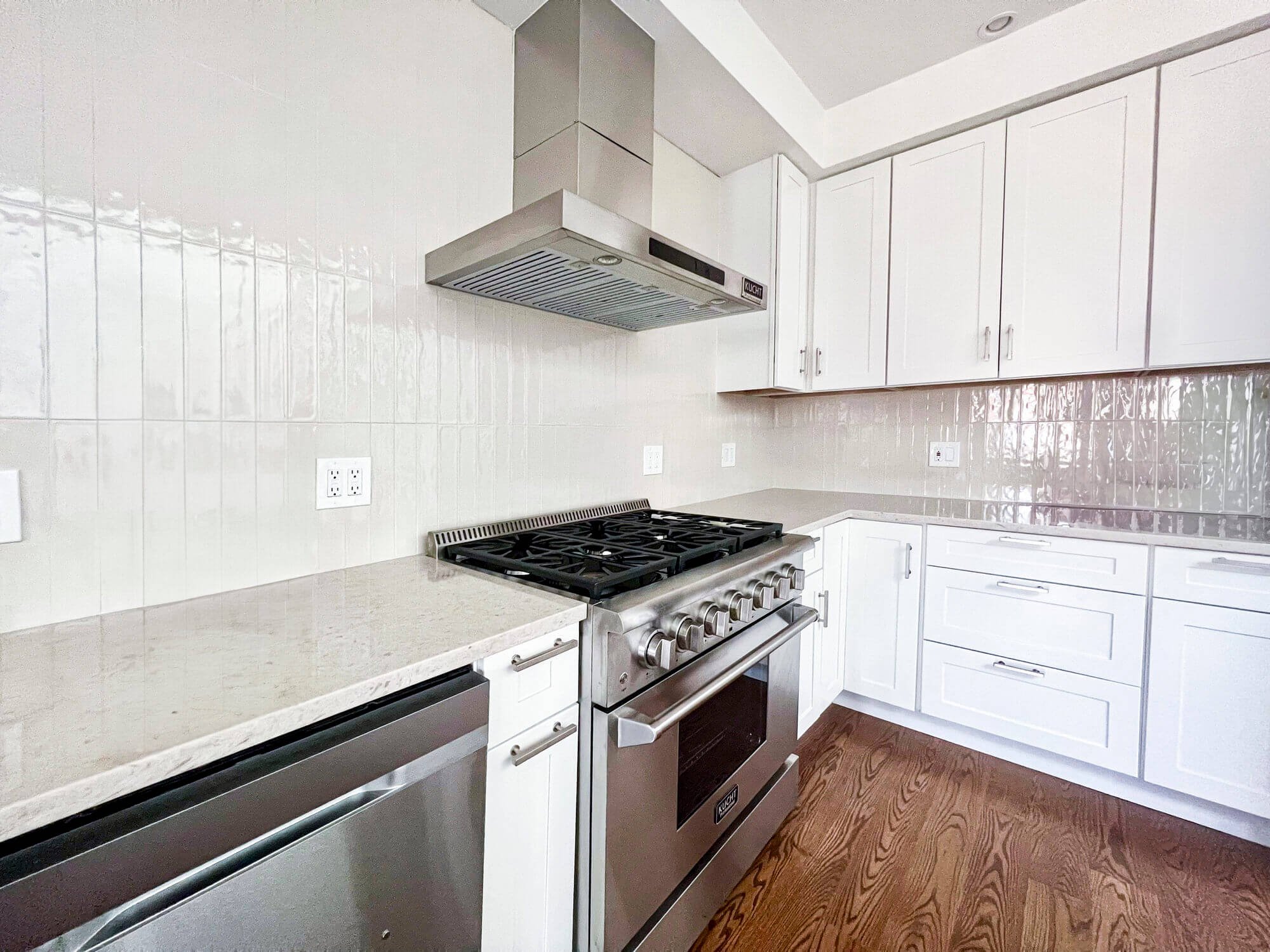
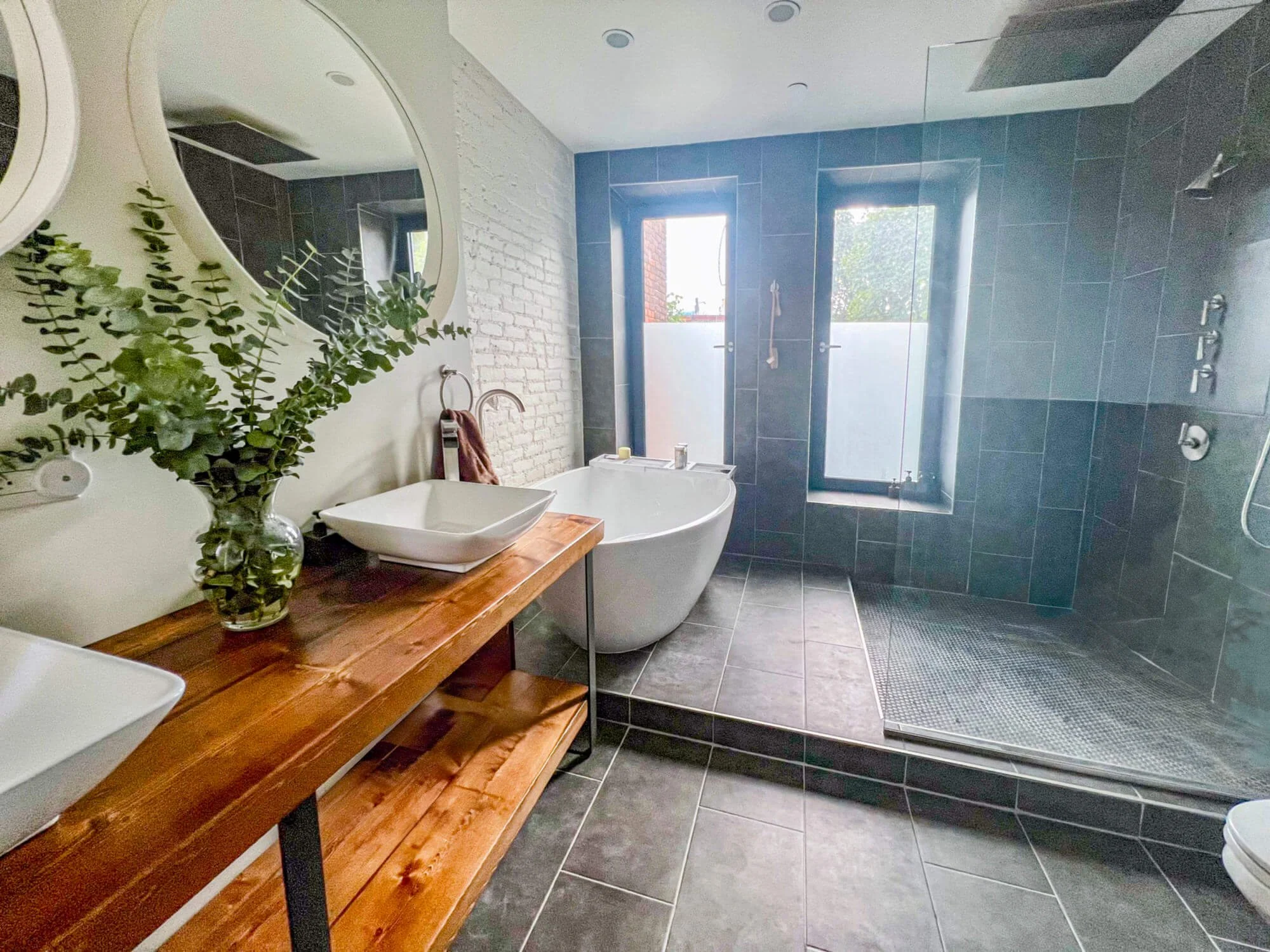
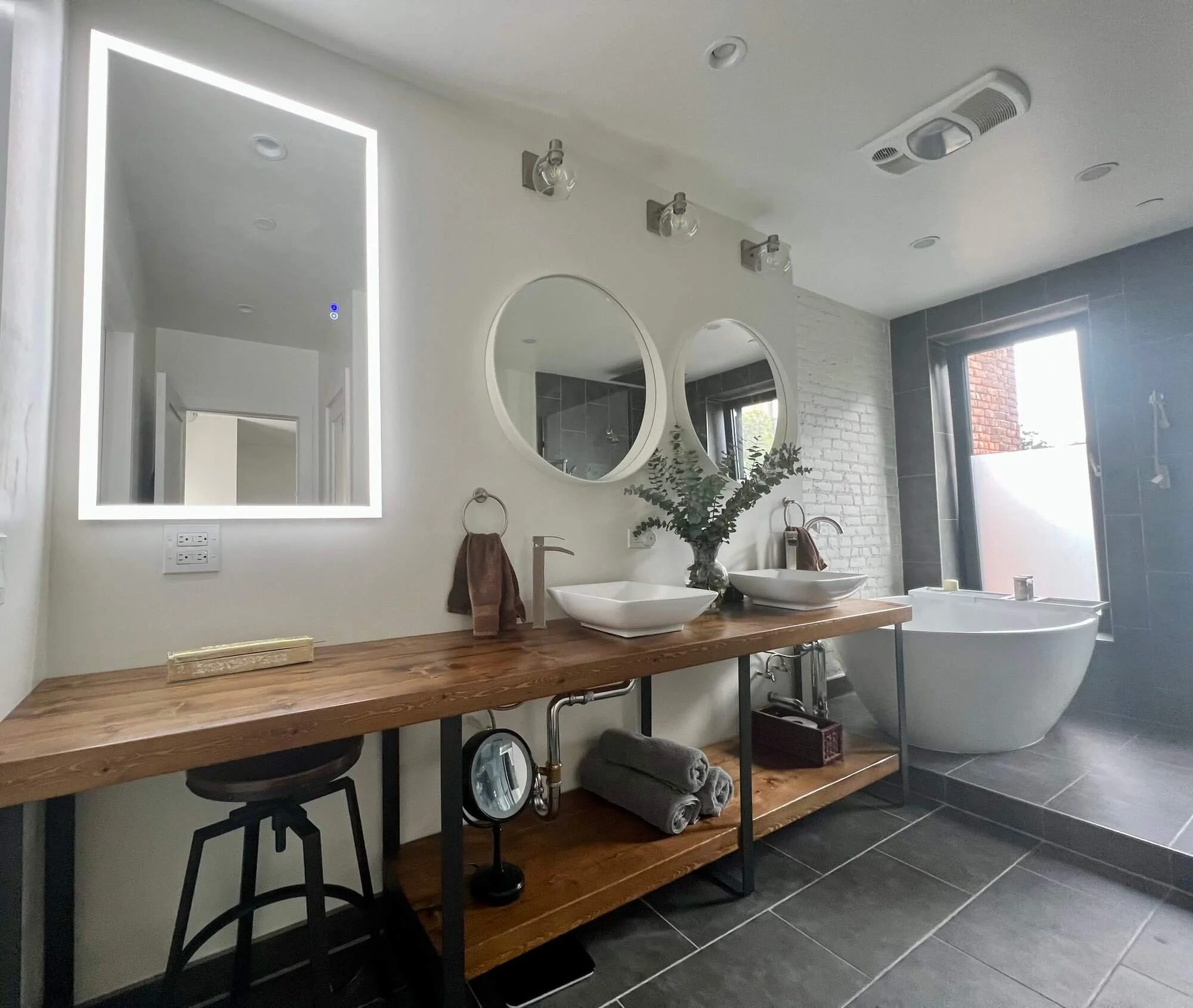
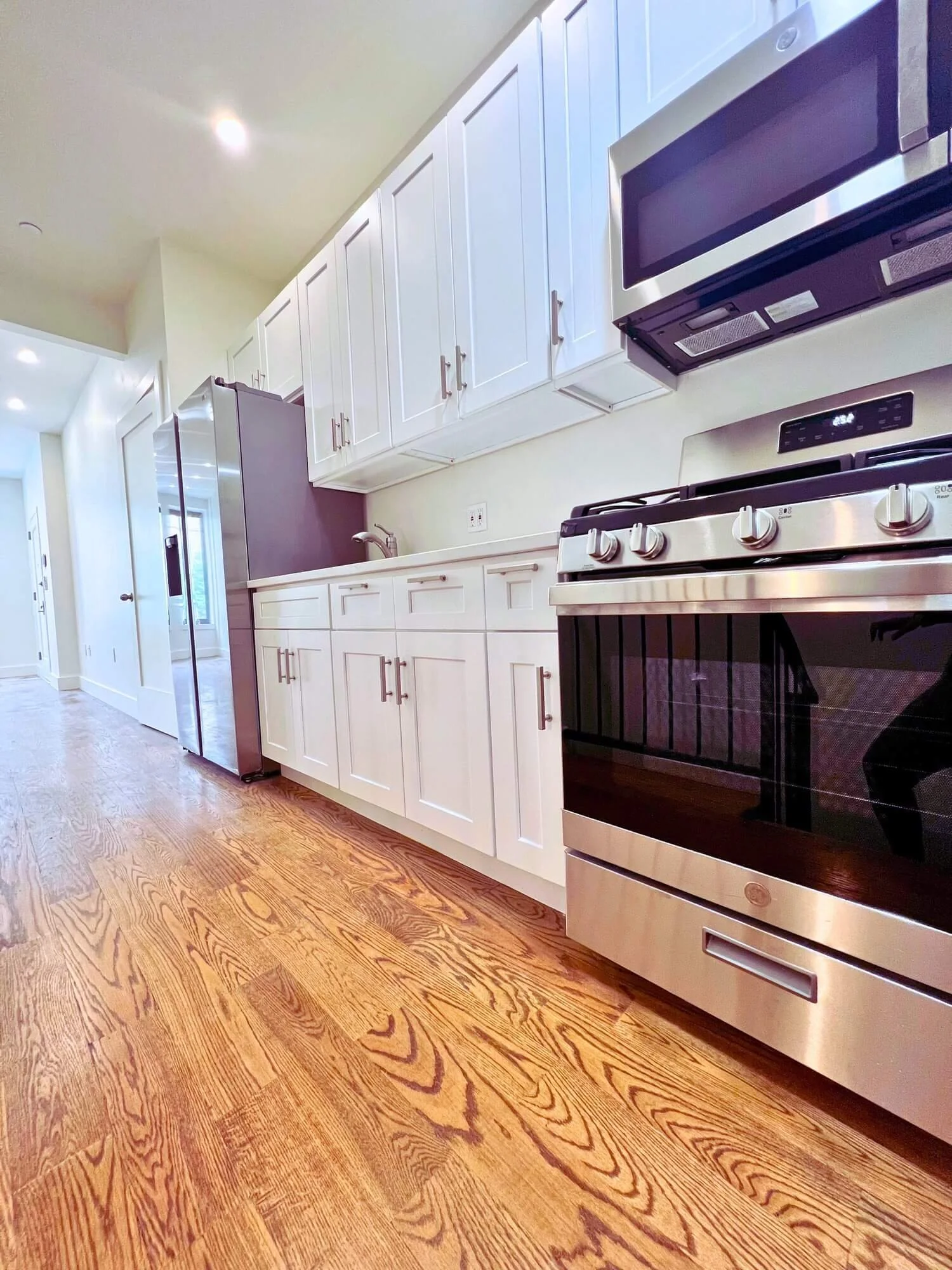
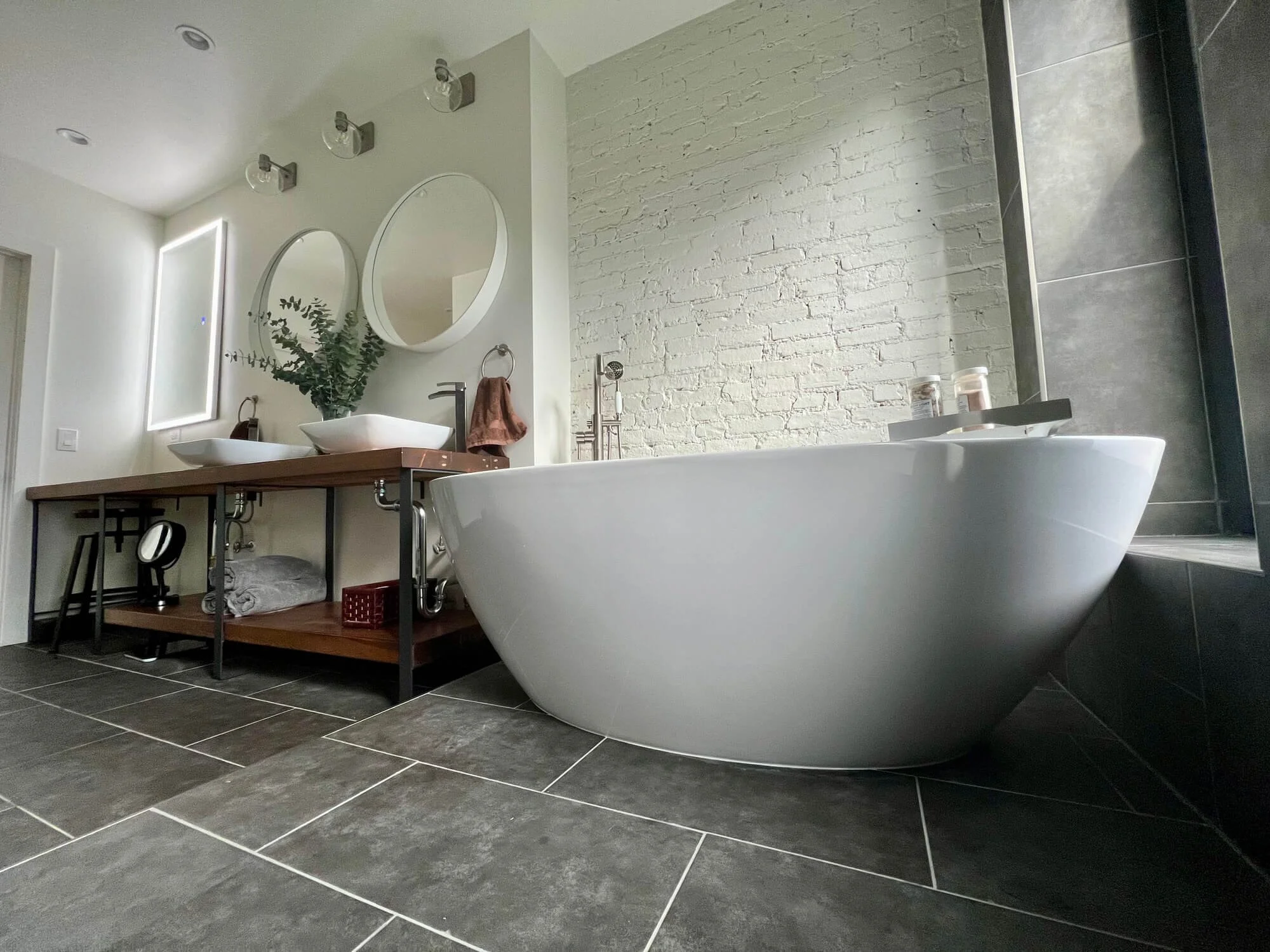
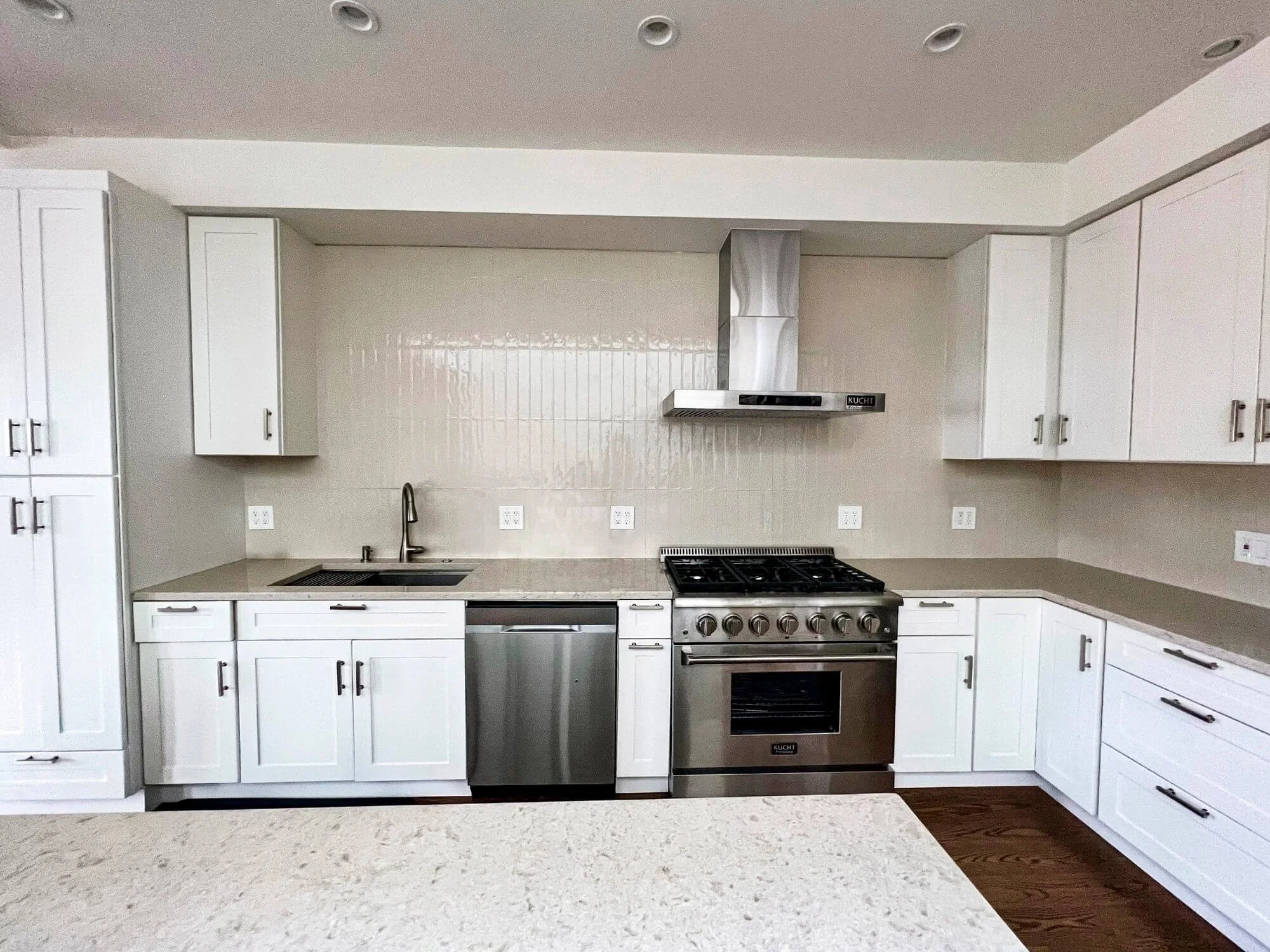
Design decisions centered on durability and end-user comfort. Kitchens feature clean-lined cabinetry, stone countertops, and tile backsplashes selected for longevity. Bathrooms were executed with restraint: timeless tile, simple hardware, balanced lighting. The objective was to deliver a refined look through proportion and material quality — not unnecessary embellishment.
Red oak flooring was utilized consistently across units for durability and visual cohesion. Material selections were made with long-term wear in mind, reinforcing the balance between elevated design and responsible capital deployment.
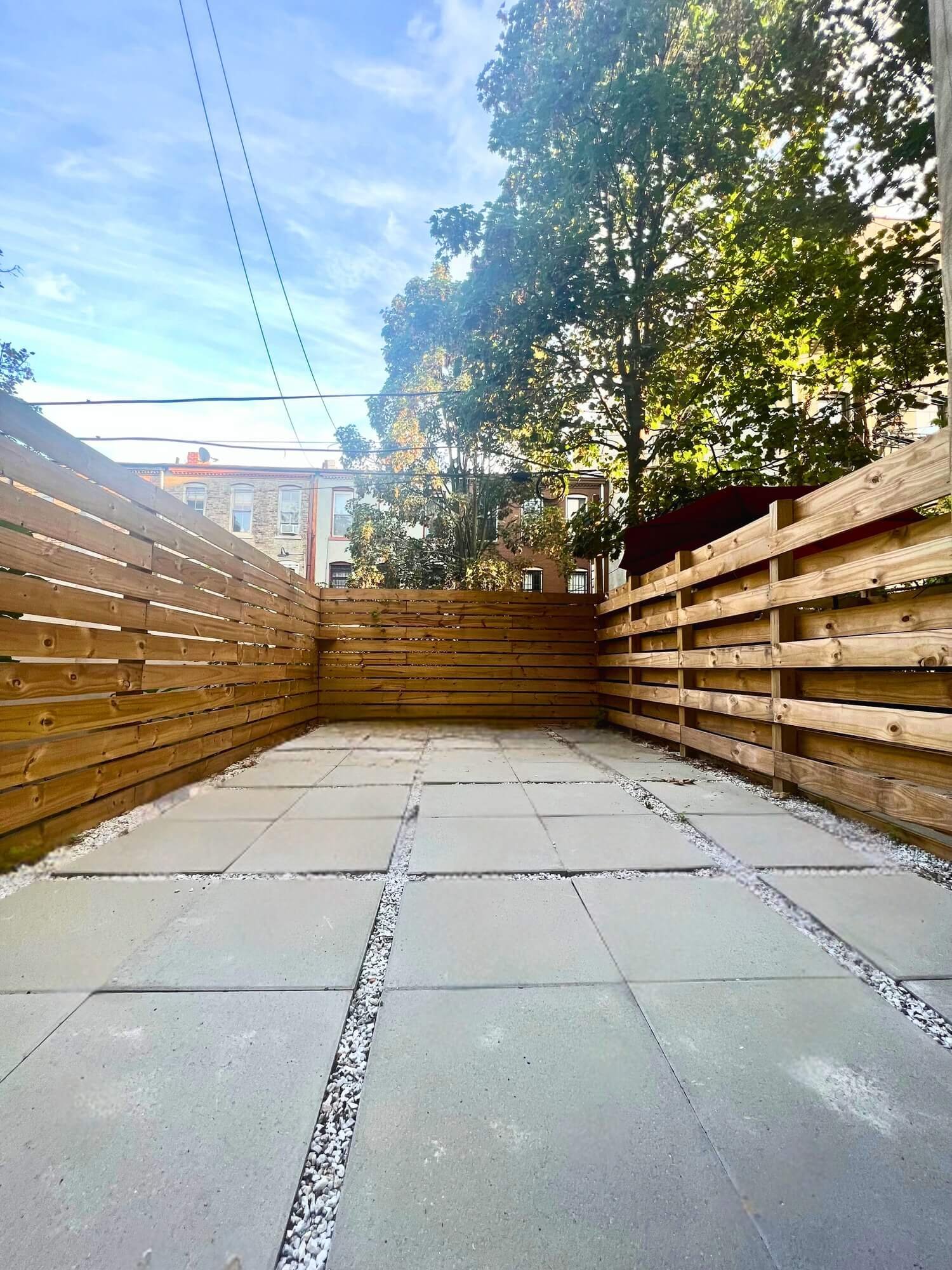
Exterior space was addressed strategically. The rear yard was hardscaped and divided so each first-floor duplex has its own private outdoor area. In dense urban markets, private exterior space materially impacts rental competitiveness and long-term asset strength. These yards were designed as extensions of the interiors, not afterthoughts.
Combining units, adding vertical square footage, gutting a multifamily building, and modernizing infrastructure requires structured NYC project management and steady coordination across trades. This renovation was less about decoration and more about recalibrating the building's configuration to better serve both ownership and tenants.
The result is a fundamentally restructured asset. What was once a six-family configuration is now a differentiated residential building anchored by an owner's triplex with a private roof deck, two duplex rentals with private yards, a studio apartment, and added amenity space.
This project demonstrates how intentional development consulting and disciplined owner's representation can unlock hidden value within Brooklyn housing stock — transforming configuration, performance, and long-term positioning in one coordinated effort.