Putnam Brownstone Renovation
Brooklyn, NY
This project was about repositioning an entire asset — not simply renovating apartments.
Putnam Brownstone Renovation
The property was a four-family Brooklyn brownstone with strong fundamentals but outdated layouts, finishes, and systems. Through structured renovation project management and disciplined owner’s representation, our objective was to elevate its market position, create a more intentional owner’s residence, and modernize the rental units to compete confidently within the neighborhood.
We approached the building as one operating system. Every design and construction decision was filtered through performance, durability, and long-term value — the same framework we apply across our NYC project management and development consulting engagements.
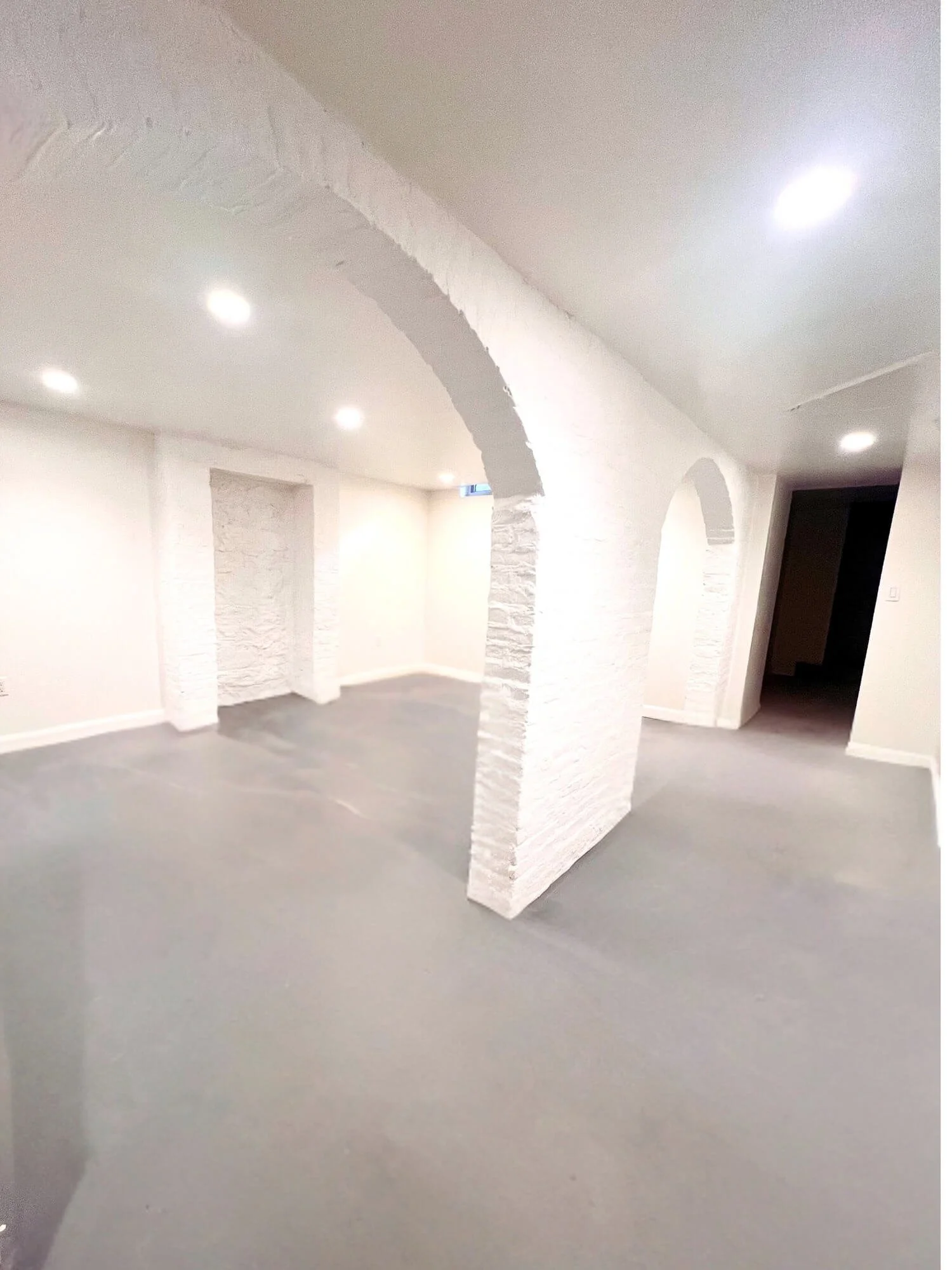
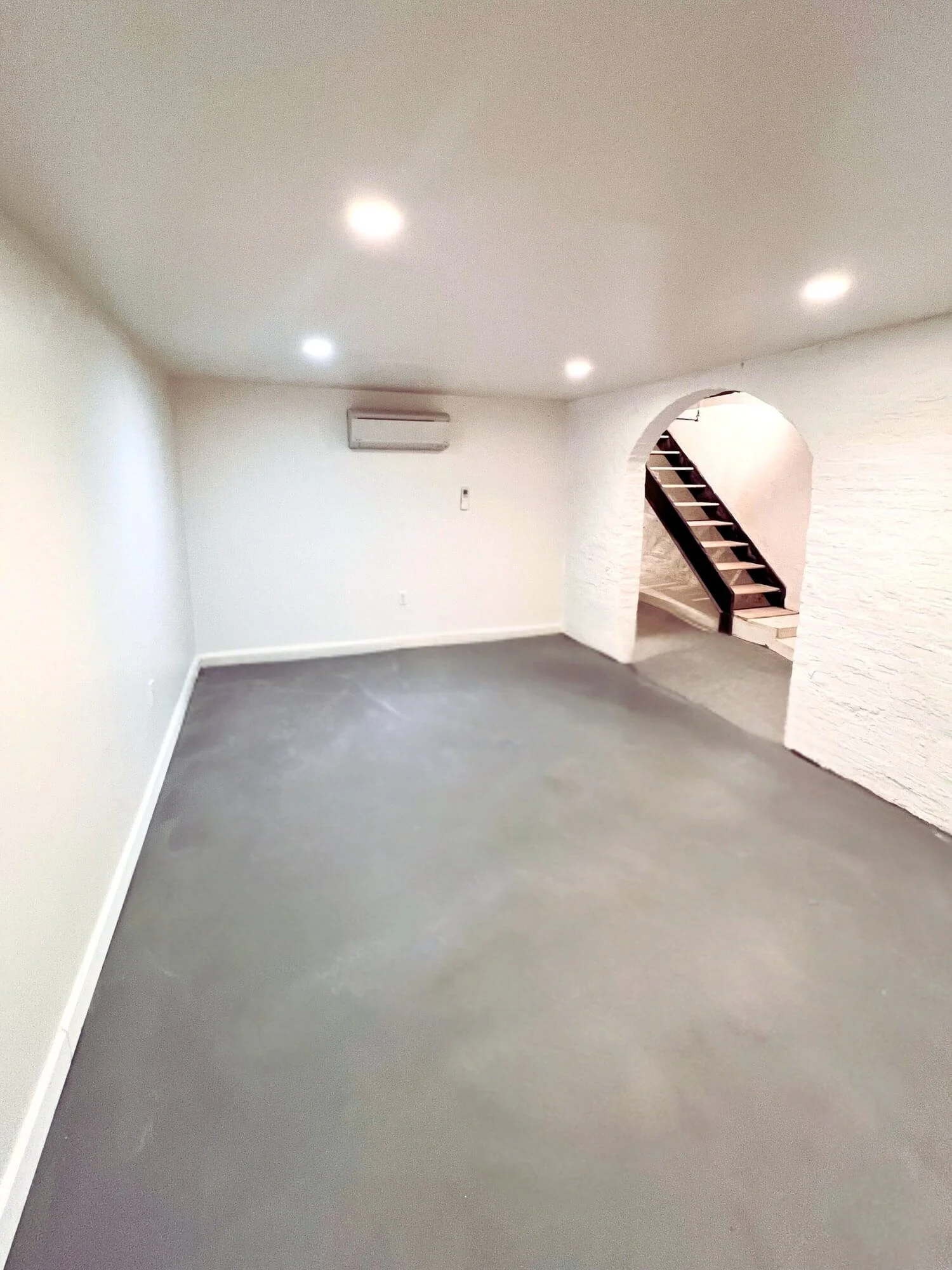
The most significant shift was reimagining the lower level. We finished the basement as accessory space connected to the owner’s unit above, creating an owner’s triplex configuration. The lower level now functions as flexible living space — ideal for recreation, fitness, media, or work — expanding usability and making the home feel more complete.
Original masonry arches were preserved and refined, while lighting, flooring, and mechanical systems were upgraded to ensure the space felt cohesive with the upper floors. The intention was clear: the lower level should feel integrated, not secondary.
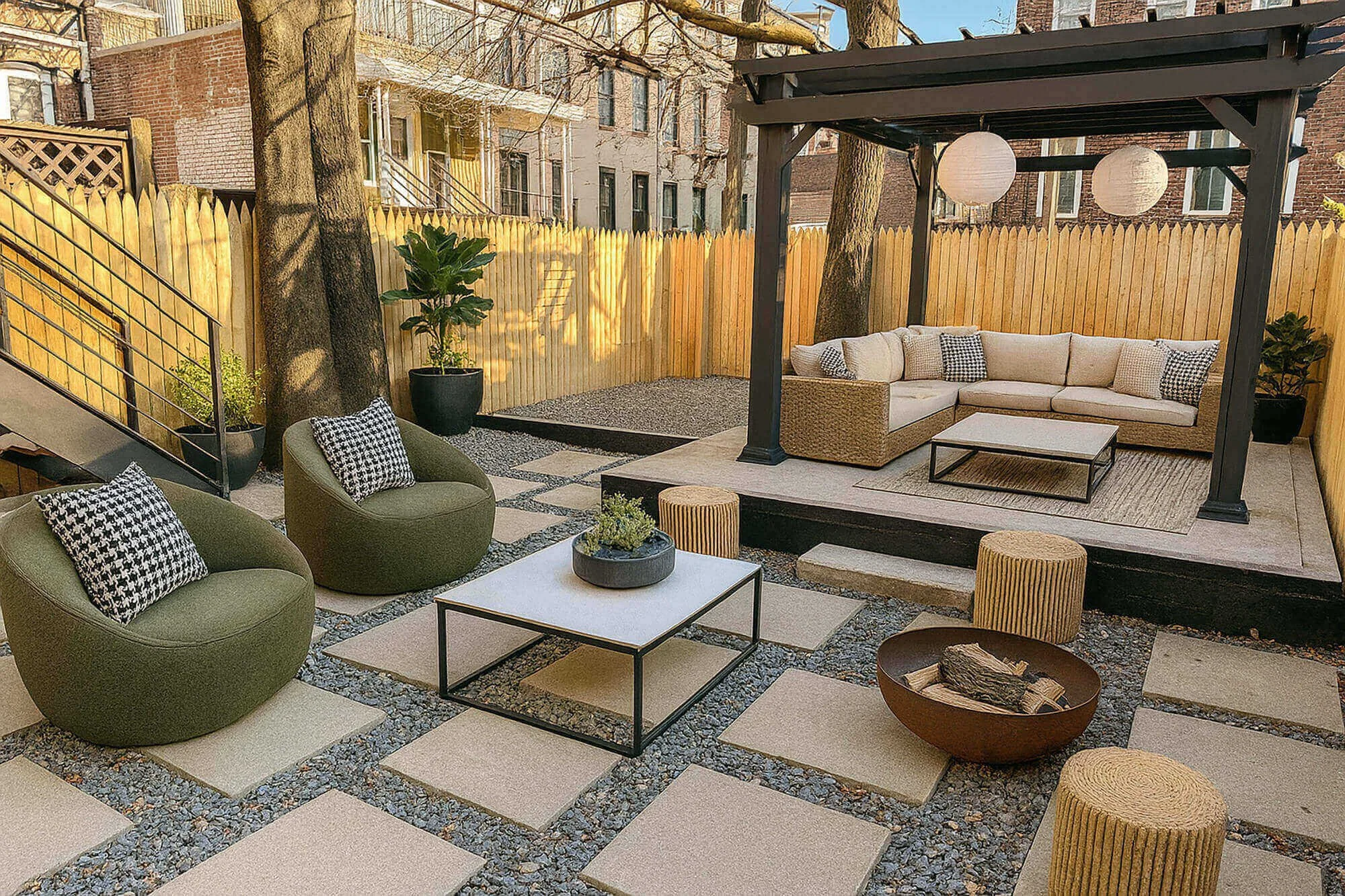
The backyard was redesigned as a true extension of the residence. Structured hardscaping and defined seating areas transformed the outdoor space into a private urban retreat. In Brooklyn, exterior space carries both lifestyle and financial weight, and the design reflected that.
The remaining three units — two one-bedrooms and one two-bedroom with a dedicated home office — were renovated to strengthen rental performance. Each apartment was evaluated individually but executed with a cohesive design language across the building.
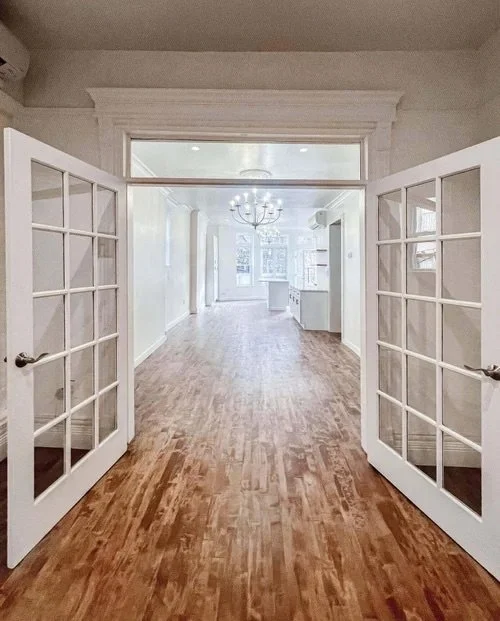
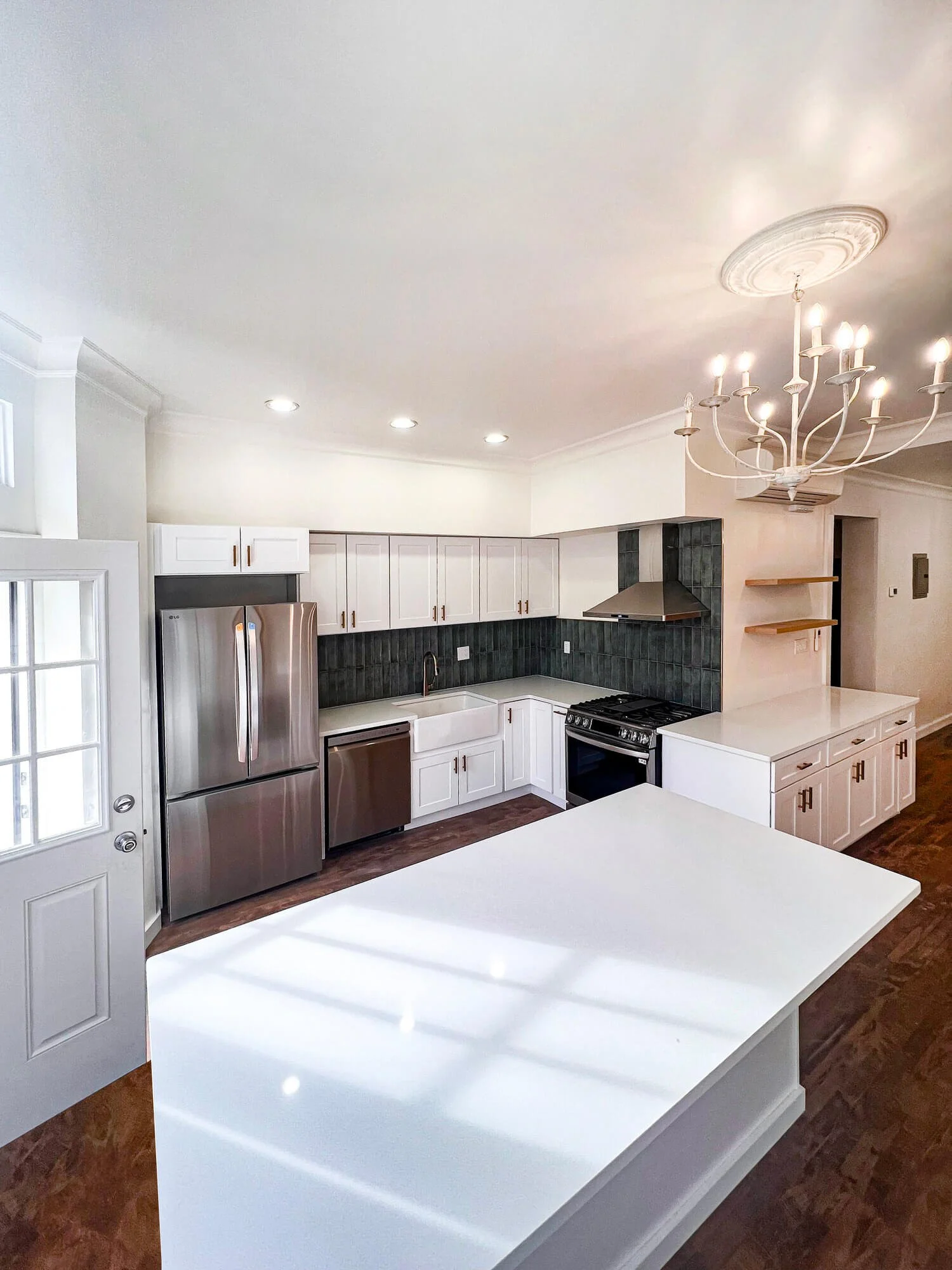
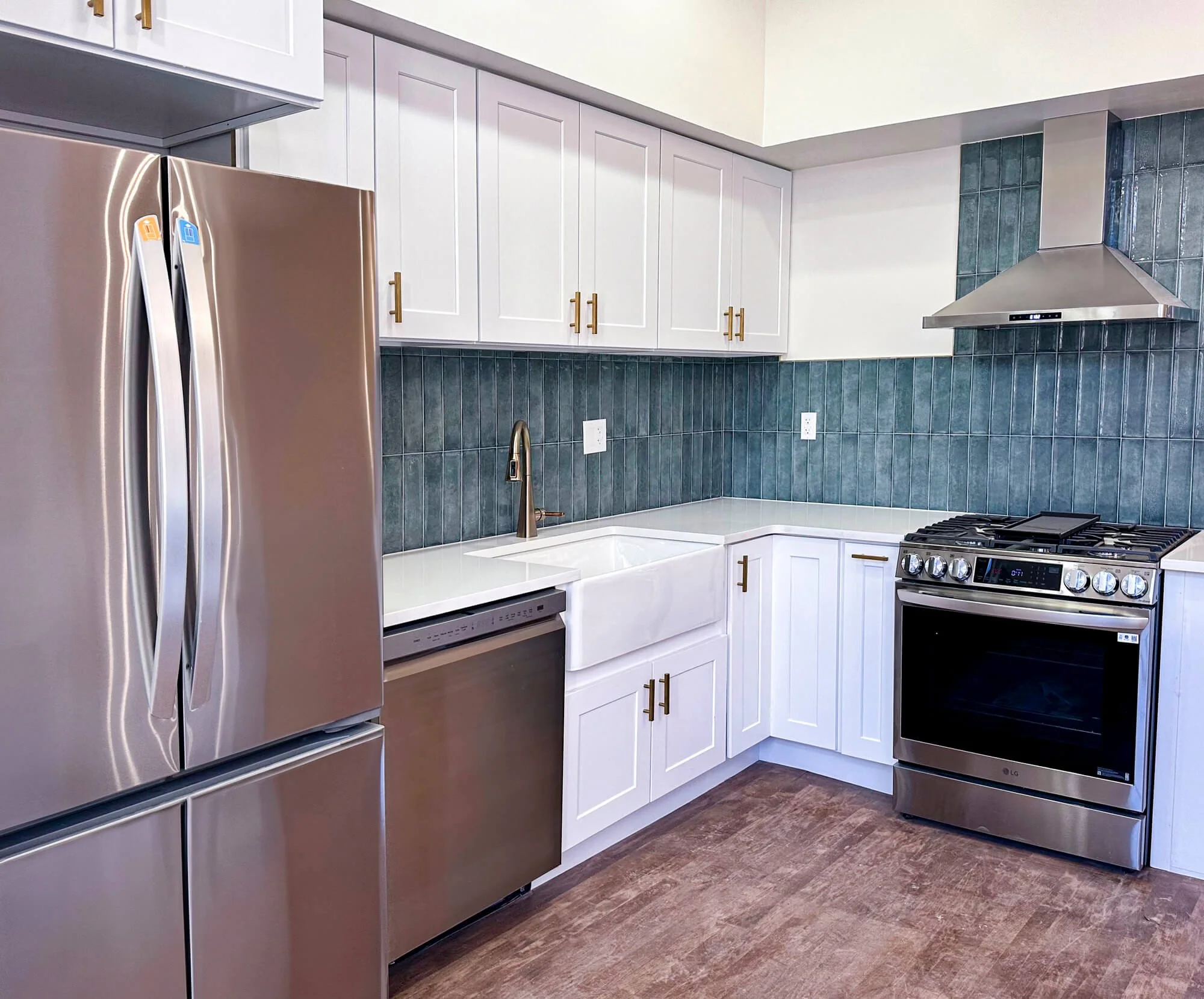
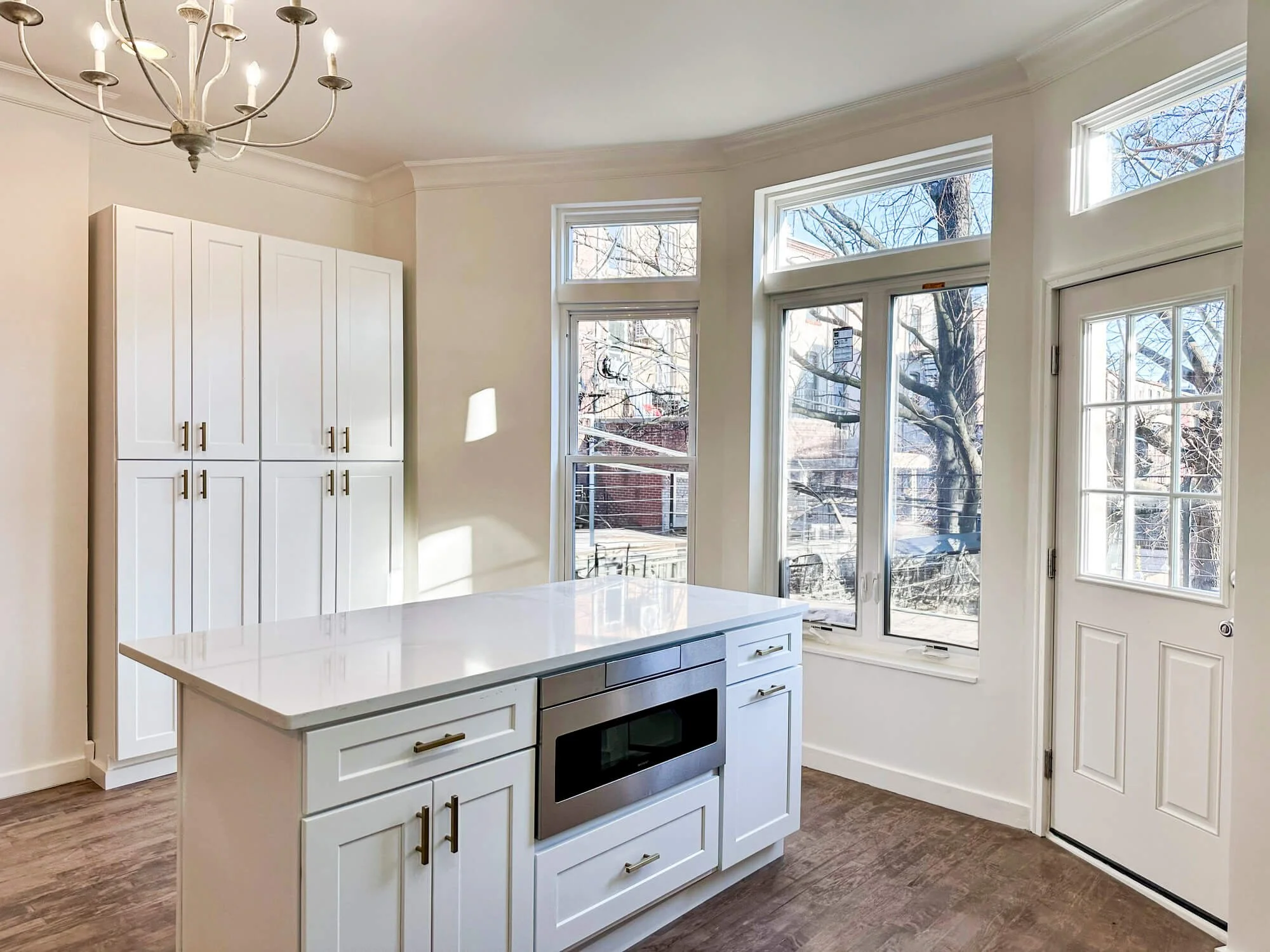
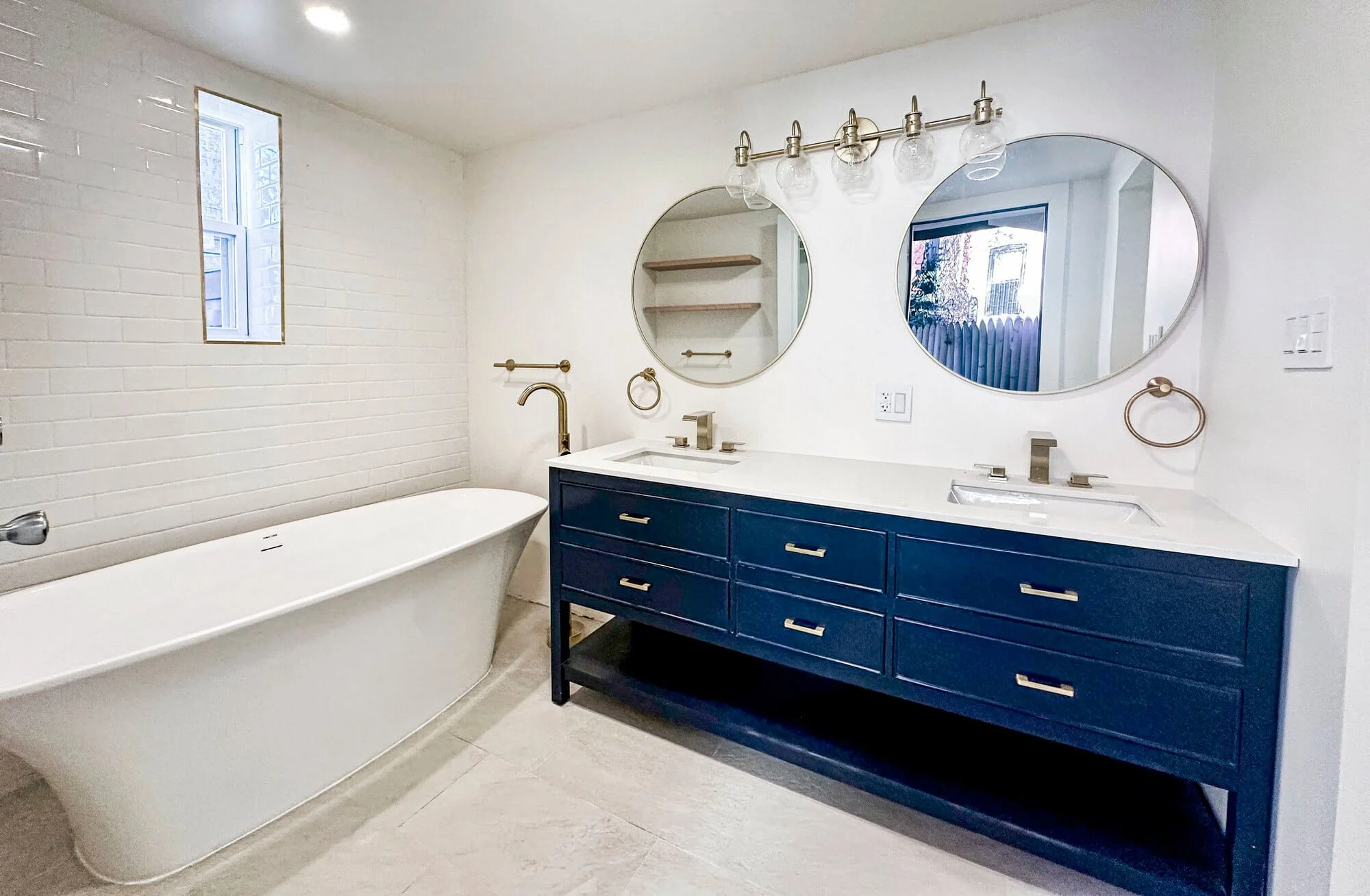
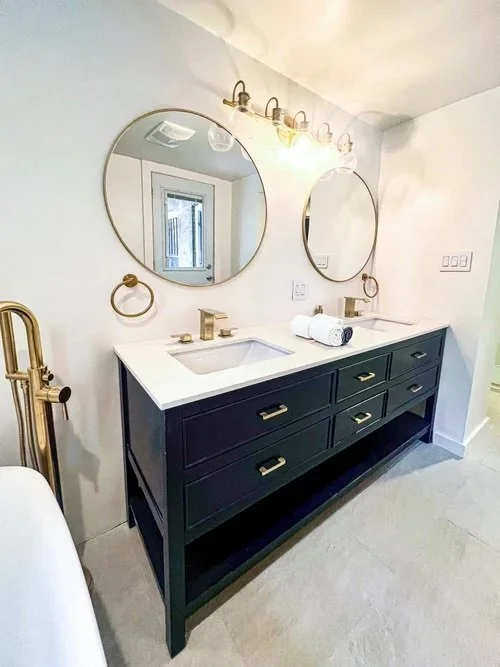
Three of the four homes received brand new kitchens. Cabinetry, countertops, appliances, and hardware were selected for a clean, timeless look. Kitchens and bathrooms in three units were fully retiled, improving both durability and visual consistency. Flooring, lighting, and paint were refreshed throughout.
Design was intentional and user-centered. As part of our owner’s representation services, we prioritize the comfort and experience of the end user while protecting the owner’s capital. Layouts were optimized for flow. Storage was considered carefully. The two-bedroom with home office was positioned for hybrid professionals who require defined workspace without sacrificing living quality. The one-bedrooms were modernized to feel bright, efficient, and competitive within the submarket.
A core principle throughout the renovation was achieving a luxe aesthetic without unnecessary overspend. Materials were selected strategically to deliver impact while protecting financial performance. Cohesive palettes, quality hardware, and thoughtful lighting created refinement without excess — aligning design decisions with asset strategy.
Behind the finishes, infrastructure upgrades were critical. We oversaw the installation of HVAC systems that allow for separated utilities across the building. This shift improves operational clarity, reduces long-term owner exposure, and strengthens overall asset stability.
Common hallways were updated to align with the upgraded units. Entry experience matters. A building should feel consistent from the front door through each apartment.
From a construction oversight standpoint, this renovation required sequencing, budget discipline, and coordinated leadership across trades. In a multi-family brownstone, thoughtful scope control is essential to protect returns while still delivering meaningful transformation. Each decision was measured against performance: Does this strengthen rent potential? Improve durability? Support long-term value?
The outcome is a stabilized, modernized four-family asset with a differentiated owner’s triplex, competitive rental units, separated utilities, and elevated common areas. The building now performs at a higher level — both functionally and financially.
Putnam demonstrates what happens when intentional design, structured project management, and disciplined owner’s representation move in alignment.